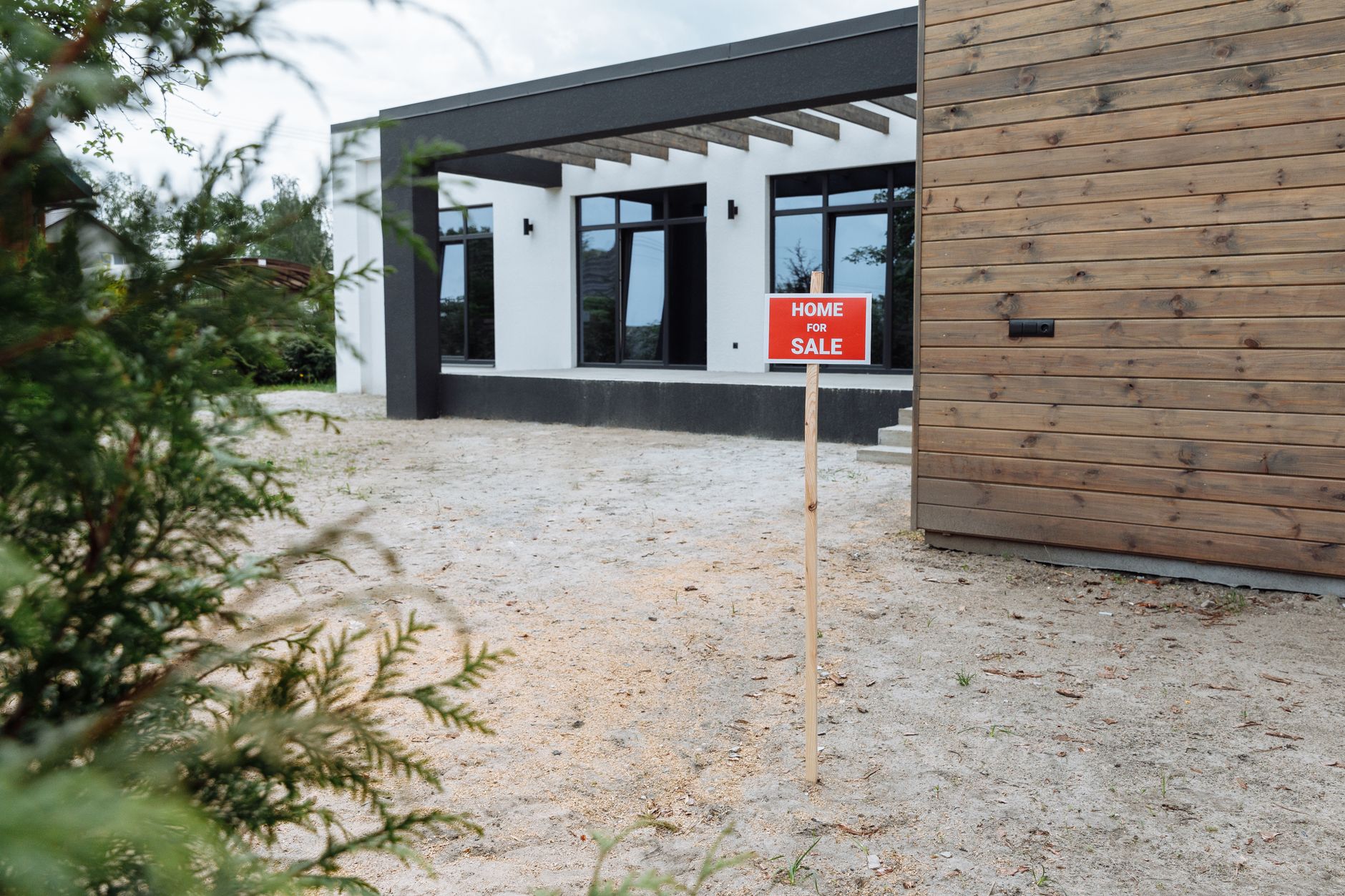
Australia's housing debate has reached a fever pitch in mid-2026, with policymakers, economists, and homeowners locked in a seemingly intractable argument: is the crisis a supply problem or a demand problem? The answer, according to a July 2026 analysis from The New Daily, is that this framing itself is a false choice—and for mortgage borrowers, understanding the nuance is critical. Planning system reform, which aims to unlock more homes, is moving at a glacial pace, while population growth and investor demand continue to fuel price pressures. For anyone with a home loan or planning to get one, this debate directly shapes interest rate expectations, property values, and borrowing capacity.
The Supply-Demand Dichotomy: Why It's a False Choice
The core of Australia's housing debate revolves around two competing narratives. On one side, supply-side advocates argue that the only solution is to build more homes—faster, denser, and in more locations. On the other, demand-side critics point to population growth, foreign investment, and tax concessions like negative gearing as the real drivers of unaffordability. The New Daily's July 12, 2026 report highlights how this binary framing obscures a more complex reality: both supply and demand are interconnected, and treating them as separate battles leads to policy paralysis.
Data from the Australian Bureau of Statistics (ABS) shows that dwelling approvals in the 12 months to May 2026 were at 175,000—well below the National Housing Accord's target of 240,000 new homes per year. Meanwhile, net overseas migration hit 415,000 in the 2025-26 financial year, according to Treasury projections. This is a classic supply-demand mismatch, but the nuance lies in how these forces interact. For example, restrictive zoning laws in Sydney's inner suburbs have kept land supply artificially tight for decades, while tax incentives have channelled investment into existing properties rather than new builds. A mortgage borrower in 2026 is caught in the crossfire: rising rents (up 12% year-on-year in capital cities, per CoreLogic) make it harder to save a deposit, while higher interest rates (the cash rate sits at 4.35% as of July 2026) squeeze borrowing power.
The false choice is dangerous because it delays action. If policymakers focus solely on supply, they ignore the demand-side levers that could cool prices more quickly. If they focus only on demand, they risk stifling the construction industry and worsening the rental crisis. For mortgage holders, the practical implication is that housing affordability will remain under pressure for at least another 18 to 24 months, according to a June 2026 report from the Reserve Bank of Australia (RBA). This means borrowers need to plan for a market where both prices and rates stay elevated.
Planning System Reform: The Slow Engine of Change
Planning system reform is the linchpin of the supply-side response, but its pace is agonisingly slow. In 2024, the federal government launched the National Planning Reform Agenda, aiming to streamline approvals for medium-density housing in established suburbs. However, as of July 2026, only three states—New South Wales, Victoria, and Queensland—have passed significant legislation, and implementation remains patchy. The New Daily report notes that local council resistance has been a major bottleneck, with some municipalities in Sydney's north shore using heritage overlays to block townhouse developments.
Consider the numbers: In the 2025-26 financial year, only 12,000 medium-density homes were approved under the new "missing middle" codes, compared to a target of 50,000. This is not just a failure of ambition but a direct consequence of a system that pits community sentiment against national need. For borrowers, this means that the hoped-for surge in housing supply—which would theoretically ease price growth—is not materialising. Property prices in Sydney rose 3.2% in the first half of 2026, according to Domain, while Melbourne saw a more modest 1.8% increase. In both cities, the lack of new supply in desirable areas is pushing buyers into outer suburbs or regional centres, where infrastructure is often lacking.
What does this mean for your mortgage strategy? If you're a first-home buyer, the delay in planning reform suggests that prices in established suburbs will remain high. You might consider looking at areas where zoning changes are already being implemented, such as Parramatta in Sydney or Fishermans Bend in Melbourne. For existing homeowners, the slow pace of reform could be a double-edged sword: your property's value may stay supported, but your ability to upgrade or downsize is constrained by the same supply issues. Arrivau's mortgage guides offer detailed breakdowns of how local market conditions affect borrowing capacity, and our rate comparison tools can help you find a loan that fits a tighter budget.
The planning system's reform also has a direct impact on construction costs. In 2026, the cost of building a new home has risen 8% year-on-year, driven by labour shortages and material price inflation. This makes new supply even more expensive, which in turn keeps existing home prices higher. For mortgage borrowers, this creates a peculiar dilemma: buying an established home might be cheaper upfront, but you'll face higher maintenance costs and less energy efficiency. New builds, while more efficient, come with a premium that stretches borrowing power. The RBA's June 2026 Financial Stability Review warns that households with high loan-to-value ratios (above 80%) are particularly vulnerable to any correction in property prices—a risk that becomes more acute if reform fails to deliver.
Demand-Side Levers: The Elephant in the Room
While supply reform inches forward, demand-side factors continue to fuel the market. The New Daily article points to negative gearing and the capital gains tax discount as two policies that disproportionately benefit investors over owner-occupiers. In the 2024-25 tax year, the Treasury estimated that negative gearing cost the budget $27 billion in forgone revenue, with the top 10% of income earners capturing 60% of these benefits. This is not just a fairness issue; it's a market distortion that channels capital into existing housing rather than new construction.
For mortgage borrowers, the demand-side debate has immediate consequences. When investors dominate the market—as they do in Sydney, where investor loans made up 38% of new lending in May 2026, per APRA data—they outbid first-home buyers and push prices higher. This directly affects your loan-to-value ratio and the deposit you need to save. A 20% deposit on a median Sydney house now requires $340,000, up from $280,000 in 2020. For a couple earning a combined $150,000 a year, that's over five years of saving, assuming they can put away 20% of their after-tax income.
The RBA's interest rate decisions are also intertwined with demand. The cash rate has been on hold at 4.35% since March 2026, after a series of cuts in late 2025. But if demand-side pressures—such as strong population growth or a rebound in investor lending—persist, the RBA may be forced to keep rates higher for longer. This is not speculation; the RBA's June 2026 Statement on Monetary Policy explicitly flags housing demand as a key upside risk to inflation. For borrowers with variable-rate loans, this means your repayments could stay elevated for another year or more. If you're on a fixed rate that's expiring, you might face a payment shock of 30% to 40% when you refinance at current rates.
Arrivau's rate comparison page can help you identify whether a fixed-rate or variable-rate loan suits your risk tolerance in this environment. Given the uncertainty around demand-side policy changes—the federal government has ruled out reforming negative gearing before the next election, due in early 2027—it's prudent to assume that the current market dynamics will persist. This means focusing on what you can control: your debt-to-income ratio, your savings buffer, and your choice of loan product.
What This Means for Your Mortgage Strategy in 2026
The false choice between supply and demand is not just an academic debate; it has practical implications for every Australian with a mortgage. Here are three data-driven strategies to consider:
1、 Prioritise location over hype. Areas where planning reform is actually happening—such as greenfield developments in Melbourne's west or medium-density zones in Brisbane's inner ring—offer better long-term value than suburbs where supply constraints are baked in. A May 2026 report from the Grattan Institute found that homes in rezoned areas have appreciated 2% less per year than those in tightly zoned suburbs, but they also offer better affordability and rental yields.
2、 Build a rate buffer. With the cash rate at 4.35% and no clear path to cuts, you should stress-test your budget at 6% or higher. The RBA's stress test for new loans already uses a floor of 3 percentage points above the current rate, but many existing borrowers haven't done this exercise. If your loan is with a major bank, you can use their online calculators, or better yet, consult a mortgage broker like Arrivau to run a full affordability assessment.
3、 Watch for policy shifts. The debate over negative gearing and capital gains tax is not going away. Even if reform doesn't happen before 2027, the mere prospect of change can spook investors and lead to price corrections. If you're considering entering the market, waiting for a policy announcement could be risky—but so is buying at the peak. A balanced approach is to target properties with strong rental demand, such as those near universities or transport hubs, which are less vulnerable to investor sentiment.
The housing debate in Australia is often presented as a choice between building more homes and curbing demand. In reality, both are necessary, and the failure to act on either front is prolonging the crisis. For mortgage borrowers, the most important takeaway is that uncertainty is the new normal. By understanding the forces at play—and using tools like Arrivau's mortgage guides to navigate them—you can make decisions that protect your financial future.
FAQ
Q: Will planning reform actually lower house prices in the next two years?
A: Based on current data, the impact is likely to be modest. The National Housing Accord targets 240,000 new homes per year, but approvals are running at 175,000. Even if reform accelerates, it takes 18 to 24 months for approvals to become completed homes. In the short term, prices are more influenced by interest rates and population growth. A June 2026 analysis by SQM Research suggests that without a significant demand-side intervention, price growth will remain at 2% to 4% annually in most capital cities.
Q: Should I fix my mortgage rate now or stay variable?
A: This depends on your risk tolerance and cash flow. As of July 2026, the average three-year fixed rate is 5.95%, while variable rates are around 6.10%. The RBA has signalled no rate cuts for at least six months, so fixing could provide certainty. However, if you expect rates to fall in 2027, a variable rate with an offset account might save you more. Use Arrivau's rate comparison tools to model different scenarios based on your loan size and repayment capacity.
Q: How does the supply-demand debate affect first-home buyers specifically?
A: First-home buyers are caught in a triple squeeze: high prices (up 8% nationally since 2020), high rates (cash rate at 4.35%), and tight supply (only 12,000 medium-density approvals under new codes). The best strategy is to target areas where supply is actually increasing, such as new suburbs in growth corridors, and to use government schemes like the First Home Guarantee, which allows a 5% deposit. However, be cautious of buying in areas with poor infrastructure, as values may not appreciate as quickly.
Sources and further reading
- The New Daily. (2026, July 12). "The false choice at the heart of Australia's housing debate." Retrieved from https://thenewdaily.com.au/finance/property/2026/07/12/housing-debate-supply-demand/
- Reserve Bank of Australia. (2026, June). "Financial Stability Review." Retrieved from https://www.rba.gov.au/publications/fsr/2026/jun/
- Grattan Institute. (2026, May). "Housing supply and affordability: A progress report." Retrieved from https://grattan.edu.au/report/housing-supply-2026/
- Australian Prudential Regulation Authority (APRA). (2026, June). "Monthly banking statistics: May 2026." Retrieved from https://www.apra.gov.au/monthly-banking-statistics
- Domain. (2026, July). "House price report: June quarter 2026." Retrieved from https://www.domain.com.au/research/house-price-report/
- Arrivau. (n.d.). "Mortgage guides for Australian borrowers." Retrieved from https://arrivau.com/mortgage-guides/
- Arrivau. (n.d.). "Compare home loan rates in Australia." Retrieved from https://arrivau.com/rates/
Want the numbers run for your situation?
Get a free, no-obligation assessment from Arrivau's licensed team — loan, property or migration.
Start a free assessment →