
Energy Retailers for Newly-Arrived Migrants in Australia: Energy Locals vs Origin vs AGL — a Broker's Perspective (2026)
The day a settlement completes is also the day my Arrivau clients realise nobody warned them about electricity. Migration done. Loan approved. Conveyancer paid. Then on day three the previous owner's energy contract lapses, the supply doesn't trip but the bills start landing, and the new arrival is looking at three retailer logos in a Google search wondering which one is the "default" Australian power company.
There isn't one. Australia's National Energy Market sells electricity through dozens of retailers — most of them buying the same wholesale power and competing on tariffs, contract terms and the small handful of features that actually move a household bill. Below is the comparison I walk my newly-arrived clients through. It is a broker's view, not a salesperson's: I do this because the same clients who get an Arrivau home loan ask me for the same answer three weeks later about energy.
What "choosing a retailer" actually means in Australia
In every state except Tasmania and Western Australia the retailer is unbundled from the network operator. You don't pick which poles and wires bring power to the house — the distributor (Ausgrid, Endeavour, Essential, Energex, Powercor, Jemena and so on) is fixed by your address. You pick the retailer that sells you the electrons travelling through those poles.
That means three things in practice:
- The supply is identical regardless of retailer. Energy Locals' electricity is not different from AGL's electricity from the socket. Reliability is the distributor's job.
- The only things that differ are tariffs (per-kWh and daily supply charge), contract terms (lock-in, exit fees, benefit periods), and the soft layer of carbon offsets, green plans, signup credits, and customer service quality.
- Switching is regulator-led and free. You sign with a new retailer, they handle the handover with your distributor within 1-10 business days, and you keep the same meter and same physical supply. There's no "off period" between retailers.
So the question reduces to: which retailer's tariff and contract terms suit a newly-arrived migrant's first 12-24 months?
The three I most often discuss with new arrivals
Energy Locals — for households that want no lock-in and carbon-offset usage
Energy Locals is an Aussie-owned retailer that markets on transparent flat-fee plans (a fixed monthly membership covering retail margin, with wholesale pass-through) and carbon-offset usage on all plans. For a newly-arrived migrant household, the appeal is concrete:
- No lock-in contracts — useful if you're still settling into a rental and might move suburbs within 12 months. With AGL or Origin you can also leave anytime in most plans, but Energy Locals' messaging makes this the headline.
- Carbon offsets included — for clients who care about household emissions without paying for a separate green plan.
- Award track record — 2025 Product Review Award for Energy and 2024 Finder Green Energy Retailer of the Year. Worth checking because awards correlate with NPS in my client conversations.
The trade-off is brand familiarity. Energy Locals doesn't have AGL's brand recognition, so some clients prefer to start with a household name and switch later. That's also defensible.
Econnex — for households that want to actually compare before signing
Econnex is not itself a retailer — it's a comparison platform that lets you put your postcode and usage in, then shows tariffs from 15+ retailers side by side. For someone who has never compared an Australian energy plan, this is usually the first stop. I tell new arrivals to do Econnex first, then pick a retailer (which might be Energy Locals, Origin, AGL, or someone else depending on the postcode).
VoltX Energy — for households moving into a freestanding home with rooftop solar potential
VoltX is a different shape of advertiser. They're not selling you a retailer plan — they're selling home battery storage and solar installation. The reason it sits on this page is that my migration clients overlap heavily with first-home-buyer clients. The minute someone buys a freestanding home with northern roof exposure, the question becomes whether to add a solar system + battery, and what the lead generation experience looks like.
VoltX runs a $100-per-lead model on the affiliate side, which tells you they value getting a serious enquiry above almost everything else. From a homeowner's side, that means the quote process is short and well-staffed. Worth a lead-in conversation even if you're not buying this quarter — the quote becomes useful for the next conversation with your mortgage broker about whether to fold the solar install into a small loan top-up.
→ Request a VoltX Energy quote
What about Origin Energy and AGL?
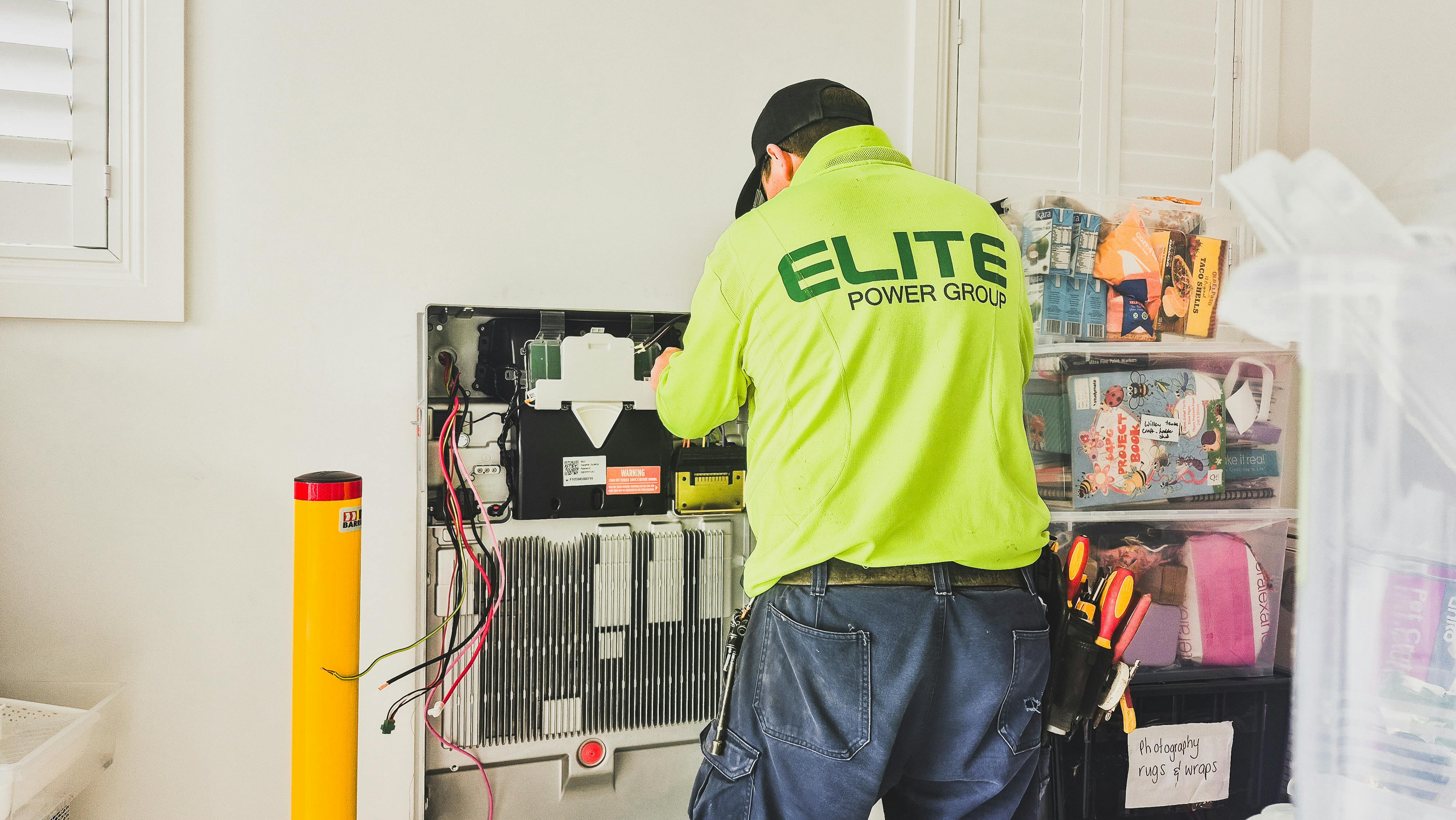
These are the brand-leaders most newly-arrived migrants recognise before they recognise any of the above. They are perfectly fine retailers — both well-capitalised, both with strong customer service teams, both with reasonable tariffs.
The honest broker take is: if you're moving suburbs frequently or you want signup credits and lock-in-free terms, the smaller retailers (Energy Locals, Powershop, Tango, GloBird depending on state) tend to be cheaper for the first two years. If you want one bill that always lands, brand consistency for the long-haul, and don't mind paying a small premium, Origin and AGL are fine defaults. I don't typically push my clients in either direction here.
What I do tell every client: don't sign anything by phone if it's an inbound call. Energy retailers do still sell through outbound channels and the discount math is rarely as good as it sounds. Use Econnex or go directly to the retailer's website.
The switching checklist for a newly-arrived migrant
If you're moving into your first owned property or your first long-term rental:
- Confirm the existing arrangement first. Sometimes a previous tenant or owner has an inherited contract that's actually competitive. Ask before you switch.
- Compare on Econnex with your postcode and a guess at usage (1-2 bedroom unit: ~3,500 kWh/year; 3-bedroom house: ~5,500 kWh/year; 4-bedroom with pool or aircon: ~9,000 kWh/year).
- Read the Energy Made Easy reference price — every retailer must disclose their tariff against the regulated reference price (DMO in most states, VDO in Victoria). A plan at 90% of reference is good; at 110% you're overpaying.
- Sign electronically. The retailer handles the supply transfer with your distributor. You'll get a welcome pack, the meter doesn't change, your supply doesn't drop.
- Diary the benefit period. Many plans have a 12-month or 24-month "guaranteed discount" benefit period after which the rate quietly re-prices. Set a reminder to compare again.
For Arrivau clients moving into their first freestanding home, the conversation extends to solar. If the orientation supports it (north-facing roof, minimal shading, decent surface area), a 6.6 kW PV system plus 10 kWh battery typically pays back in 5-7 years against current grid tariffs. We'd usually pair that with a small home loan top-up rather than a separate green loan, since the rate differential is usually small and the application overhead matters.
Final word from the broker side
Energy is one of those settlement decisions newly-arrived migrants overthink for the wrong reasons (brand familiarity) and under-think for the right ones (lock-in terms, benefit-period reset, rooftop solar option). The good news is that switching is genuinely free and the regulator has done a lot of the heavy lifting on tariff transparency.
If you're a future Arrivau home-loan client — settle the loan, take possession of the property, then come back to this comparison. The right time to switch is the same week as settlement, before the existing contract lapses to a default rate.
About the author
Ben Wu is the Director of Arrivau Pty Ltd (ABN 81 643 901 599), a Sydney-based business serving migrants entering Australia. He is a Registered Migration Agent (MARN 1687552), holds a PIER QEAC accreditation (G167), is an Australian Credit Licence holder under the Arrivau group, and a NSW Justice of the Peace (JP Registration #222877). Office: 16/650 George St, Sydney NSW 2000.
This article reflects independent broker commentary at the time of writing (April 2026). Tariffs, retailer products and lender requirements change frequently. Always compare against the published reference price (DMO/VDO) and confirm current terms with the retailer before signing. Affiliate links may earn Arrivau a commission at no additional cost to you; commission does not influence the editorial position above.
Want the numbers run for your situation?
Get a free, no-obligation assessment from Arrivau's licensed team — loan, property or migration.
Start a free assessment →Keep reading