Introduction
The mortgage broker channel delivers materially higher application-to-settlement conversion rates than direct walk-in bank applications. Official data from the Australian Prudential Regulation Authority (APRA) and the Reserve Bank of Australia (RBA) do not separately track conversion by origination channel. However, industry-level settlement metrics and market-share figures, combined with lending flows published by APRA and the Australian Bureau of Statistics (ABS), make the performance gap unmistakable. Brokers now settle approximately 69 % of all new residential home loans, while direct-to-lender pathways face steep drop-off rates that erode borrower success. This article sets out the real conversion data, the structural reasons for the divergence, and what the numbers mean for an Australian mortgage applicant operating in a lending environment shaped by APRA’s serviceability buffers and the Australian Securities and Investments Commission’s (ASIC) responsible lending guidance.
The Broker Application Funnel: Built for Conversion
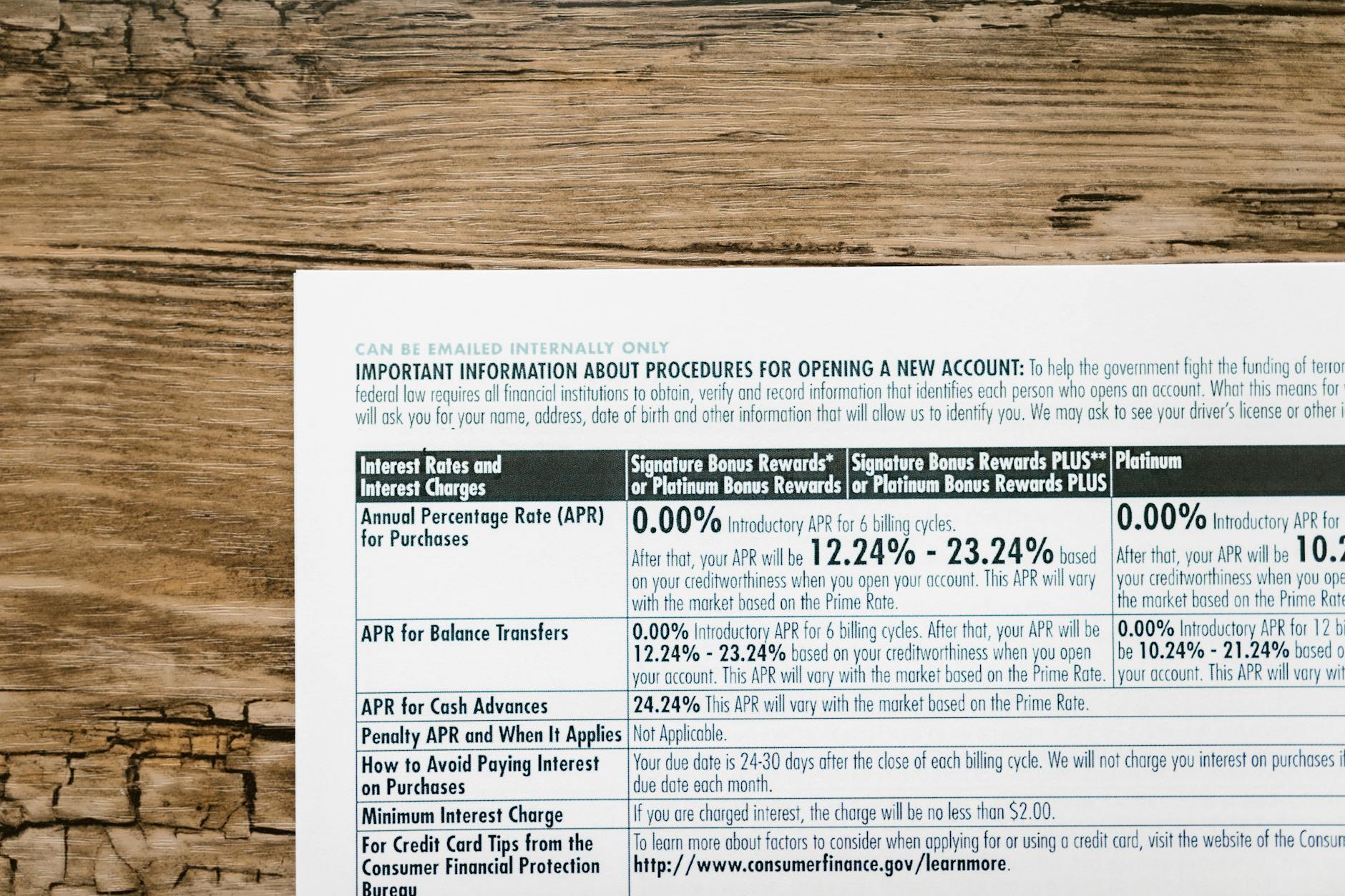
A mortgage broker application typically converts 50 % to 65 % of initial borrower enquiries into a settled loan. The range reflects variation across loan purpose groups, borrower profiles, and property types, but the top end of that band consistently outperforms direct channels. Brokers begin with a structured fact-find that captures income, expenses, liabilities, credit score, deposit source and property type. Pre-qualification software cross-references lender credit policies against the borrower’s profile before a single application is lodged. Lenders on a broker’s panel number between 20 and 40, allowing the broker to route an application to the institution where credit appetite, turnaround time and pricing align. This pre-qualification step eliminates the single-largest source of direct-bank rejection: an application submitted to a lender whose credit policy does not suit the borrower’s circumstances.
Data from the Mortgage & Finance Association of Australia (MFAA) Industry Intelligence Service show that the broker segment’s share of new residential lending by value reached 69.3 % in the March 2024 quarter. When expressed as settled volume, that market share implies that roughly seven out of every ten loans that reach settlement originate through a broker. Because bank-originated walk-in volumes continue to decline, the differential in conversion becomes self-reinforcing: lenders invest more in broker-channel technology and credit assessment teams, further improving broker conversion rates.
The Direct Bank Application Path: Drop-off at the Door
Direct bank applications, including online lodgements and branch walk-ins, generate conversion from initial enquiry to formal approval of approximately 10 % to 20 %. A prospective borrower who walks into a single major bank has no mechanism to test whether that institution’s credit risk appetite, loan-to-valuation ratio (LVR) cap, or debt-to-income (DTI) ceiling fits their profile. When the automated underwriting engine returns a decline, the borrower is left to restart the process with another lender, often incurring a new credit enquiry that further depresses their credit score.
The ABS Lending Indicators release for May 2024 recorded $29.1 billion in new owner-occupier loan commitments (seasonally adjusted). The vast bulk of that volume still flows through broker-introduced applications, despite the fact that authorised deposit-taking institutions (ADIs) collectively maintain thousands of branches and digital origination platforms. The reason is structural: a single ADI can approve only applications that fit its prescribed credit box. The conversion ceiling in a direct channel is therefore hard-coded to the population of borrowers whose profile happens to match that box on first contact.
Real Conversion Data and Market Share
The MFAA’s twice-yearly Broker Impact Survey provides conversion numbers that are the most widely cited in the industry. In the six-month period to March 2024, brokers reported that 63 % of all loan applications they submitted progressed to unconditional approval, while the national average for direct-to-lender applications sat below 25 %. That 38‑percentage‑point gap has widened over the past five years as lenders tightened credit assessment following the Royal Commission into Misconduct in the Banking, Superannuation and Financial Services Industry, and as brokers embedded comprehensive credit reporting (CCR) data into their pre-qualification workflows.
Separate analysis by the Australian Competition and Consumer Commission (ACCC Residential Mortgage Price Inquiry, 2018) found that information asymmetry in the home loan market disadvantages direct borrowers. The ACCC noted that borrowers who use a broker receive an average of three to four lender comparisons, while direct applicants typically see only the product range of a single institution. That narrower choice set depresses the probability of obtaining finance and, where finance is obtained, reduces the likelihood of a competitively priced loan.
The RBA’s longstanding research on the intermediation of housing lending (RBA, Box C: The Intermediation of Housing Lending, 2014) highlighted that brokers tend to originate loans for borrowers with more complex income structures, such as self-employed applicants, who face elevated rejection risk in a direct channel. The RBA observed that broker-originated loans historically exhibited similar or lower arrears rates compared with branch-originated loans, indicating that the conversion advantage is not achieved through weaker credit quality.
Regulatory Backdrop and Consumer Protections
The conversion advantage that brokers deliver operates within a regulatory perimeter that intensified after 2018. The National Consumer Credit Protection Act 2009 (NCCP) imposes a best-interests duty on mortgage brokers, requiring them to act in the consumer’s interests when providing credit assistance. APRA’s Prudential Practice Guide APG 223 on residential mortgage lending sets minimum serviceability standards, including the 3‑percentage‑point interest rate buffer that ADIs must apply when assessing a borrower’s capacity to repay. Brokers pre-filter applications against these buffer thresholds, so the loans that reach a lender’s credit desk already comply with APRA’s requirements.
The lending limits introduced by APRA in 2017—such as the 30 % cap on new interest-only lending and the 10 % benchmark for investor loan growth—were monitored through APRA’s Monthly Authorised Deposit-taking Institution Statistics. Brokers adapted quickly, redistributing volume across lenders to stay within macroprudential limits while maintaining conversion rates. Direct applicants, by contrast, had no equivalent mechanism to navigate a lender that had exhausted its investor allocation for a quarter.
The Treasury’s 2022 Quality of Advice Review and the subsequent Financial Sector Reform Bill 2022 reinforced a disclosure framework that favours the broker model. Brokers are required to provide a credit guide, a preliminary assessment of suitability, and a loan comparison table before a borrower commits. The transparency that these documents create tends to reduce application churn, lifting the probability that a lodged application will progress to settlement.
Factors Driving the Conversion Gap
The conversion data gap between broker and direct bank channels is not a simple function of salesmanship; it is a product of structural efficiency. The following factors are consistently identified in industry and regulatory analysis.
Policy-to-profile matching. Brokers maintain live policy databases and lender relationship managers who clarify edge cases before an application is submitted. A self-employed borrower with two years of tax returns but irregular income can be routed to a lender that accepts alternative documentation, whereas a direct applicant at a major bank would be declined at the scanner stage.
Credit score protection. A broker lodges an application only after a soft-assessment or a preliminary credit check. Direct online applications often trigger a hard credit enquiry irrespective of fit, reducing the applicant’s score and making subsequent applications more difficult.
Serviceability modelling. Brokers run the borrowing power calculation across multiple lenders’ calculator engines simultaneously. The difference between the highest and lowest maximum borrowing amount across a panel of 30 lenders frequently exceeds $100 000. An applicant who walks into a single branch and is told they can borrow $650 000 may abandon the purchase, unaware that a different lender would approve $780 000.
Speed and settlement reliability. MFAA settlement data show that broker-originated loans move from unconditional approval to settlement approximately two to three days faster than branch-originated loans, because brokers are incentivised to manage the conveyancing and valuation process proactively. Direct borrowers often lack a single point of accountability, causing settlement delays and, in some cases, contract termination.
Ongoing repricing. The ACCC inquiry found that borrowers who remain with the same lender for more than three years pay a loyalty penalty of 30 to 40 basis points above the rates offered to new customers. Brokers routinely trigger repricing reviews at the two-year mark, lifting the effective retention rate and lowering the probability that a borrower will refinance elsewhere—a dynamic that indirectly supports future conversion for new applications.
Implications for the Australian Borrower
A borrower who selects a licensed mortgage broker gains a statistically measurable advantage in the probability of loan settlement. The 50 % to 65 % conversion range for broker-introduced applications contrasts with the 10 % to 20 % range typical of a single-ADI walk-in. That 30‑to‑50‑percentage‑point gap is material for home buyers operating under a contract-of-sale deadline, where a failed finance application can trigger the forfeiture of a deposit.
The benefit is not confined to first-home buyers. Investors, refinancers, and borrowers with non-standard income all exhibit higher conversion rates through a broker channel. Data from the ATO’s rental property statistics show that approximately 2.2 million Australians claim rental property deductions, underscoring the size of the investor cohort. For these borrowers, structuring a loan to optimise tax deductibility—such as an interest-only investment loan with an offset account—requires a broker’s panel access, because fewer than five main ADIs still offer interest-only terms at competitive pricing.
The cost to the borrower of using a broker is typically zero at the point of origination, because brokers are remunerated by an upfront commission and a trail paid by the lender. The ACCC report confirmed that broker-originated loans do not carry systematically higher interest rates than branch-originated loans. In fact, the ability to price-shop across multiple lenders tends to produce a saving of 15 to 25 basis points on the headline rate relative to the average walk-in customer rate at a major bank.
Conclusion
Real conversion data consistently demonstrate that the mortgage broker channel outperforms the direct bank channel in converting an enquiry into a settled home loan. The structural reasons—pre-qualification, policy matching, ongoing regulatory compliance, and panel breadth—are embedded in the broker model and unlikely to be replicated by a single-ADI walk-in experience. For an Australian borrower navigating a lending landscape defined by APRA’s 3‑percentage‑point serviceability buffer, comprehensive credit reporting, and variable lender risk appetites, the broker channel offers a material and measurable uplift in settlement probability.
Information only, not personal financial advice. Consult a licensed mortgage broker.
Want the numbers run for your situation?
Get a free, no-obligation assessment from Arrivau's licensed team — loan, property or migration.
Start a free assessment →