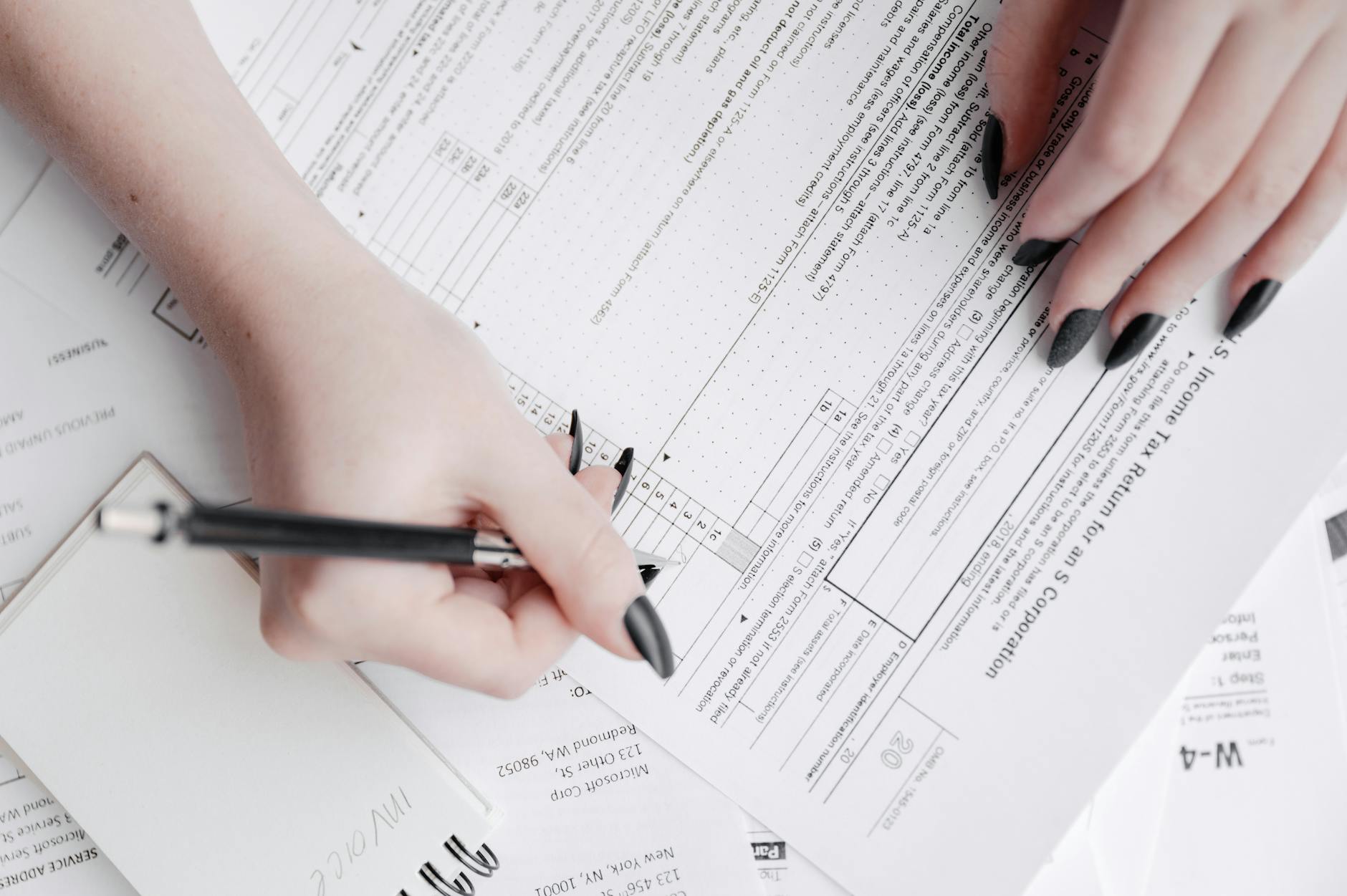
Self-Employed and Applying for a Home Loan? The 5 Income Documents Australian Banks Actually Require
If you work for yourself, you already know the drill: tax time is more complex, cash flow can be uneven, and proving your income to a lender feels like being asked to explain a magic trick. Yet self-employed borrowers make up a substantial share of the Australian mortgage market, from tradies running a sole trader business to company directors paying themselves a mix of salary and dividends. When you apply for a home loan, the documents you supply will make or break the deal. Lenders won’t simply take your word for it on revenue; they want a paper trail that ties your tax obligations, bank balances, and accounting records into a coherent story.
In this guide, we walk through the five core income documents that Australian banks and non-bank lenders expect from self-employed applicants: BAS statements, an accountant’s letter, bank statements (both business and personal), tax returns and notices of assessment, and profit and loss or interim management accounts. We also explain how credit assessors use these documents to calculate your real repayment capacity — and where many applications fall short. Whether you are a sole trader, a partner in a partnership, or a director of a Pty Ltd company, this checklist will help you get your paperwork ready before you submit a loan application.
Why Self-Employed Borrowers Face Stricter Income Verification
A salaried employee typically provides two recent payslips and the lender can verify income with a phone call to the HR department. Self-employed income is different. It can be seasonal, project-based, or wrapped up in business structures that make the individual’s take-home pay less transparent. The Australian Prudential Regulation Authority (APRA) requires lenders to apply robust serviceability assessments, and for the self-employed that means digging into historical earnings, tax compliance, and the sustainability of the business itself.
Lenders are essentially asking two questions:
- How much income do you actually generate year after year, after business expenses?
- Is that income likely to continue at a similar level for the life of the loan?
Because the answers depend on documents that a self-employed person controls — you can choose what to report on a tax return, what expenses to claim, and how much cash to leave inside the company — banks scrutinise every figure. They will look for consistency between the ATO-reported data and the money flowing through your bank accounts. Any mismatch raises a red flag. That is why it is vital to understand exactly which documents carry the most weight.
1. BAS Statements: The Quarterly Pulse of Your Business
Business Activity Statements (BAS) are lodged with the Australian Taxation Office either monthly or quarterly. For a lender, a BAS is a near real-time look at your gross revenue, GST collected, and GST paid. While a tax return might show income from 12 to 18 months ago, the most recent BAS may be only a few weeks old. That makes BAS statements one of the most powerful income documents for a self-employed applicant, especially when you have an upward trend.
Most lenders want to see the last four quarterly BAS statements, or 12 monthly BAS if you report monthly. They will compare the total sales or fees reported on the BAS with the revenue you claim in your loan application. If your tax return shows $120,000 in gross business income but your four most recent BAS statements show a run rate closer to $200,000, the lender may use the higher figure — provided the BAS figures align with bank statement credits.
Key points lenders check on BAS:
- Total sales (G1) versus declared income on tax returns
- PAYG withholding (W1) if you employ staff, to see if the business pays wages regularly
- GST turnover consistency — big jumps or drops often trigger a request for an explanation
One area where self-employed borrowers slip up is by submitting BAS statements late or lodging them with estimated figures. Lenders can cross-check BAS data with the integrated client account on ATO online services. If your BAS lodgement history is patchy, that signals poor financial discipline and may weaken your application even if the numbers are strong.
2. Accountant’s Letter: Your Professional Income Declaration
An accountant’s letter is a formal declaration from a qualified tax agent or CPA (Certified Practising Accountant) that verifies your income, the structure of your business, and often your ability to service a loan without financial hardship. Different lenders have different templates, but the letter usually covers:
- The applicant’s full name and the accountant’s professional registration details
- How long the accountant has been engaged by the client
- Business structure (sole trader, partnership, company, trust)
- Percentage ownership of the business
- Confirmation that the income stated in the loan application is consistent with the business’s financial records
- Confirmation that the applicant’s income is stable and sustainable
Some lenders, particularly the major banks, require the accountant’s letter to be dated within four weeks of the application and to explicitly state that the accountant is unaware of any factors that would cause a material decline in income. Think of it as a hybrid between a reference and a financial audit — it puts the accountant’s professional reputation on the line, so they will only sign it if the numbers are genuine.
What an accountant’s letter does not do is replace the underlying financial documents. Banks will still want to see the raw data. The letter acts as a summary and an endorsement, not as primary proof. If your accountant is also your long-time tax agent, lenders tend to give the letter more weight because the accounting relationship is established.
3. Bank Statements: The Truth in the Transaction Trail
If a BAS shows what you told the ATO, and a tax return shows the final calculation, bank statements show the money actually moving in and out. Australian lenders routinely request the last six months of business transaction account statements and the last three to six months of personal everyday account statements to verify declared income and assess living expenses.
For a self-employed applicant, assessors look for:
- Regular credits that match the sales disclosed on BAS and tax returns. If your business account shows $15,000 per month in deposits but your BAS reports only $10,000, the shortfall needs to be explained (e.g., some deposits are transfers from another account, not revenue).
- Debits for business expenses that are consistent with the claimed profit. A business that claims $20,000 in monthly operating costs on a tax return but only shows $5,000 leaving the business account may be under-reporting income or over-claiming deductions.
- Director’s fees, dividends, or trust distributions paid from the business account to the personal account. For a company director, the personal bank statements must show the money actually landing. Lenders rarely accept “notional” income retained inside the company.
- Evidence of consistent loan affordability. If the proposed mortgage repayment is $3,500 per month and your personal account has never held more than $2,000 at any point except after a one-off deposit, the assessor will question genuine savings and cash flow management.
Bank statement analysis has become more stringent since the banking royal commission. Lenders now use automated tools to categorise transactions and flag high-risk spending, undisclosed liabilities, or gambling activity. Make sure your accounts reflect a steady financial rhythm in the months leading up to the application. Large, unexplained cash deposits will need a paper trail — for instance, a sale of an asset or a gift that can be documented.
4. Tax Returns and Notices of Assessment: The Finalised Income Snapshot
Every self-employed home loan application needs the last two years’ personal tax returns (and sometimes business tax returns if you operate through a company or trust) plus the corresponding ATO Notices of Assessment. These documents confirm that your income has been declared to the ATO and any tax payable has been settled.
Lenders use the taxable income figure shown on the Notice of Assessment as the starting point for servicing. However, they will often add back certain non-cash deductions to get a more realistic picture of your disposable income:
- Depreciation
- Additional superannuation contributions (above the compulsory guarantee)
- Interest expenses that relate to business loans that may be refinanced or paid out
- One-off write-offs that are not recurring
This “add-back” approach can significantly raise your assessed income. For example, a sole trader who reports $80,000 taxable income but claimed $15,000 in depreciation and made $10,000 in extra super contributions may be assessed at closer to $105,000, improving borrowing capacity by tens of thousands of dollars.
It is critical that your tax returns are lodged and your tax debt is either paid in full or under an agreed ATO payment plan. An outstanding tax debt without a formal arrangement can stop a home loan application in its tracks. Lenders view overdue tax as a prior-ranking liability that could compromise mortgage repayments.
5. Profit and Loss Statements and Interim Management Accounts
When your most recent tax return is more than six months old, lenders often ask for an up-to-date profit and loss statement (P&L) prepared by an accountant or for interim management accounts covering the period since the last lodgement. A specialist self-employed home loan assessor may also accept a P&L that you prepared yourself if it can be cross-referenced with BAS and bank statements.
A well-prepared P&L should mirror the format of your tax return but capture the current financial year. It typically includes:
- Revenue (sales, fees, commissions) broken down by month or quarter
- Cost of goods sold (if applicable)
- Operating expenses (rent, utilities, staff wages, insurance, vehicle costs)
- Net profit before tax
Lenders will check whether the profit trend is stable, growing, or declining. A business that shows a 30% fall in profit in the current year-to-date compared with the same period last year may still get approved if there is a reasonable explanation — but the borrowing amount may be reduced to reflect the lower serviceability.
For company directors or trust beneficiaries, the P&L of the business entity is only half the story. You will also need to demonstrate the flow of income from the business to your personal account via dividends, wages, or trust distributions. This is where many applications go wrong: a profitable company does not automatically mean a strong personal income in the eyes of a credit assessor.
How Banks Assess Repayment Capacity for the Self-Employed
Lenders do not simply take your latest income figure and multiply it by a fixed debt-to-income ratio. They follow a structured process regulated by APRA and influenced by the particular risk appetite of each institution.
Step 1: Income calculation. Assessors start with the taxable income from the most recent two years’ Notices of Assessment. Where the more recent year is lower, they almost always use the lower figure — this is the “down-year” rule. Then they add back allowed non-cash expenses and adjustments. If there is third-party verification (BAS, bank statements, accountant’s letter) supporting a higher current run rate, some lenders will use that higher figure, but only if the supporting evidence is consistent.
Step 2: Expense verification. The Household Expenditure Measure (HEM) gets used as a floor, but lenders increasingly rely on actual expenditure pulled from your bank statements. The higher of HEM or declared/actual expenses is applied. Self-employed applicants who have minimal personal spending but high business costs coded to personal accounts can find their borrowing power reduced.
Step 3: Debt servicing buffer. APRA requires lenders to apply a 3% interest rate buffer above the loan’s actual rate. So if your home loan has a 6.5% p.a. rate, servicing is assessed at 9.5% p.a. This buffer tests whether you could still afford repayments if rates rise.
Step 4: Loan term and structure. Most lenders assess over a 30-year term, even if you plan to repay faster. Loans with interest-only periods are assessed over the remaining principal-and-interest term. For self-employed borrowers with irregular income, an offset account can be an attractive feature because it reduces the principal on which interest is calculated while keeping funds accessible — but the bank will still assess your ability to repay the contracted amount, not the offset-reduced amount.
Step 5: Collateral and LVR. Loan-to-value ratio caps apply. Lenders mortgage insurance (LMI) may be required for LVRs above 80%, and some insurers impose stricter income verification rules on self-employed applicants. A full-doc application with a clean set of income documents remains the strongest path to approval at a competitive rate.
FAQ
How many years of tax returns do I need if I’m newly self-employed? Most mainstream lenders require two years of full financials. If you have been self-employed for less than two years but were previously in the same industry as an employee, some lenders will consider one year plus the prior employment history. A small number of specialist lenders offer “alt-doc” loans that accept 12 months BAS or six months bank statements as income evidence, with a larger deposit and a rate loading.
Will the bank accept a BAS as a primary income document without a tax return? BAS statements are rarely accepted on their own for a full-doc loan. They are used as supplementary evidence to confirm current trading levels. Lenders still want the tax return and Notice of Assessment because these show the final, after-expenses income and confirm tax compliance status.
What if my accountant letter states a higher income than my tax return? That is a red flag. If the accountant’s letter claims you earn $150,000 but your Notice of Assessment shows $90,000, the credit assessor will demand an explanation. In most cases, the lower figure from the ATO is used unless you can show the difference arises from one-off expenses or structural changes that have permanently lifted income.
Can I use a low-doc loan if I don’t have all the paperwork? Low-doc loans exist but require a larger deposit (typically 20–30%), come with higher interest rates, and still need some form of income verification, such as an accountant’s declaration or BAS statements. The days of “no-doc” loans that required no evidence of income are over in Australia.
How do lenders treat trust distributions? If you receive income via a discretionary trust, lenders will usually only recognise distributions that are documented via trustee minutes and supported by bank credits into a personal account. Many assessors want to see a two-year history of consistent distributions. Retained earnings inside the trust do not count as personal income for servicing.
Conclusion: Build Your Document Pack Before You Submit
Gathering the right income documents for a self-employed home loan is not a last-minute exercise. BAS statements give the near-time pulse, an accountant’s letter provides professional endorsement, bank statements show the real cash flow, tax returns and notices of assessment deliver the ATO-verified bottom line, and up-to-date profit and loss statements fill the gap between last lodgement and today. When these five pieces of evidence align, banks can confidently measure your true repayment capacity and offer terms that reflect the real strength of your business, not just the tax-reduced snapshot.
Spend a few hours organising your documents before you apply. Check that your BAS, bank credits, and tax returns tell the same story. Talk to your accountant about what an income declaration letter should contain and ask them to update it close to the application date. A coherent, transparent document pack can mean the difference between a fast approval at standard rates and months of back-and-forth — or even a decline that tarnishes your credit file. In the increasingly data-driven world of mortgage assessment, consistency is the self-employed borrower’s greatest asset.
Want the numbers run for your situation?
Get a free, no-obligation assessment from Arrivau's licensed team — loan, property or migration.
Start a free assessment →