Introduction
A construction loan in Australia is not a single lump-sum disbursement. Funds are released according to a standard five-stage progress payment schedule designed to align the lender’s security position with the incremental completion of the dwelling. This structure directly shapes the borrower’s cash flow obligations, interest cost trajectory, and contingency planning. For English-speaking borrowers navigating the Australian mortgage market, understanding the precise mechanics of the five-stage drawdown process is essential to avoid liquidity shortfalls and disputes with builders (ASIC MoneySmart).
The five stages—slab or base, frame, lock-up, fix-out and completion—represent contractual milestones defined by the Home Building Contract and the domestic building insurance framework. Each stage release triggers a corresponding increase in the loan balance and, for variable-rate products, a recalibration of monthly interest charges. While the construction loan market in Australia represented approximately 12% of new housing loan commitments in the 12 months to June 2024 (RBA, Statistical Table D2), the staged payment structure generates unique cash flow dynamics not present in established property purchases.
This article sets out the five-stage progress payment framework in detail, examines its cash flow implications, outlines contingency management for cost overruns and delays, and summarises the regulatory and lender requirements that govern construction lending in Australia. All data is sourced from the Reserve Bank of Australia (RBA), the Australian Prudential Regulation Authority (APRA) and the Australian Securities and Investments Commission (ASIC). The content is information only and does not constitute personal financial advice. Readers should consult a licensed mortgage broker before entering a construction loan agreement.
The Five-Stage Progress Payment Structure

The five stages of a construction loan progress payment schedule follow the physical build sequence and are codified in the standard residential building contracts used by Housing Industry Association (HIA) and Master Builders Australia members. Lenders typically release funds at the following percentages of the total fixed-price contract value, though exact ratios vary by lender and builder profile:
- Slab or base stage (10–15%) – Payment on completion of the concrete slab, footings and base brickwork. This stage often includes site preparation and drainage. Drawdown at this point activates the loan balance for the principal and marks the start of interest charges on the drawn amount.
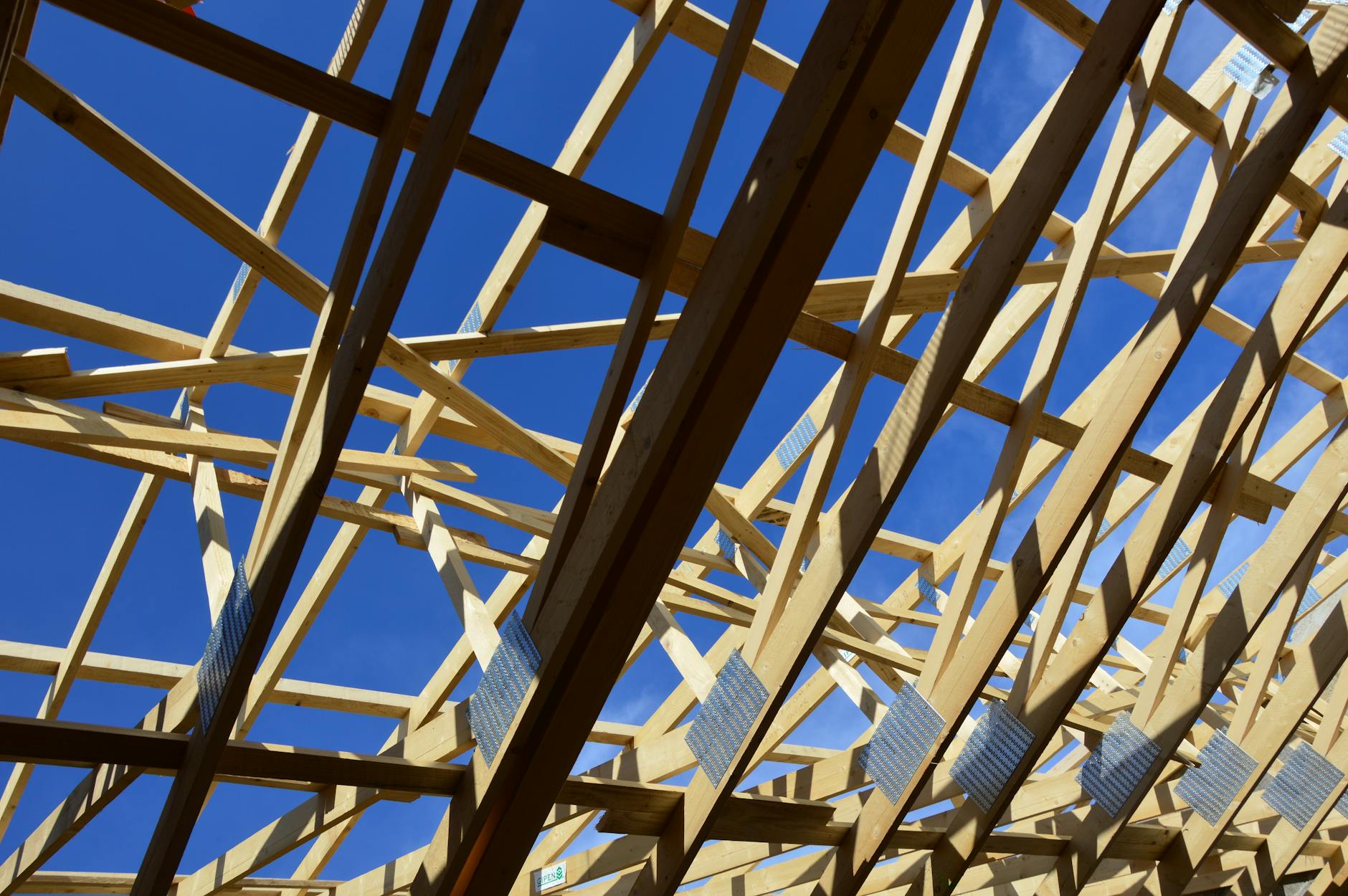
- Frame stage (15–20%) – Payment once the wall and roof framing is complete, including windows and external doors. The cumulative drawdown reaches 25–35% of the contract sum.
- Lock-up stage (20–25%) – Payment following installation of external cladding, roofing, windows and external doors, effectively securing the structure against weather and entry. The property is considered “lock-up”. Cumulative drawdown typically sits at 45–60% of the contract price.
- Fix-out or internal lining stage (25–30%) – Payment once internal linings, architraves, skirting, kitchen cabinetry, bathroom tiling and internal doors are installed. Plumbing and electrical rough-ins are completed prior to this drawdown. Cumulative payments reach 70–85% of the contract.
- Completion stage (10–15%) – Final payment upon practical completion, when all contractual works are finished and a certificate of occupancy or final inspection certificate is issued. The builder rectifies any defects and hands over the keys. At this point, 100% of the construction loan has been drawn.
The above ranges are indicative. APRA’s Prudential Practice Guide APG 223 requires authorised deposit-taking institutions (ADIs) to ensure that progress payments are supported by independent valuations or building inspections before each drawdown (APRA, APG 223, paragraph 89). This supervisory requirement means borrowers cannot rely solely on the builder’s invoice; lenders verify stage completion via a third-party quantity surveyor or valuer engaged at the borrower’s expense, typically at a cost of $300 to $600 per inspection. The valuer’s report confirms that the percentage complete aligns with the contractual stage definition.
Borrowers should note that stage percentages are applied to the fixed-price building contract, not to the land component. In a house-and-land package, the land settlement occurs separately, often financed through a land loan or as the initial draw of the construction facility. The five-stage schedule applies exclusively to the build contract.
Cash Flow Dynamics and Interest Cost Implications
Interest on a construction loan accrues only on the drawn balance, not on the total approved limit. This feature gives borrowers a form of natural cash flow management: interest charges increase gradually as the build progresses. For a $400,000 construction loan drawn over a 12-month build at an average variable rate of 6.20% per annum, the total interest cost during construction—assuming a linear drawdown—can be approximated at $12,400. However, actual interest cost varies substantially with the timing and percentage of each stage release, as well as any construction delays.
An uneven drawdown profile raised to schedule creates three distinct cash flow phases:
- Early accumulation (slab to lock-up) – Approximately 50–60% of the contract sum is drawn within the first three months of a standard single-storey build. This front-loaded release means interest charges ramp up quickly. A borrower with a $400,000 contract may see the outstanding balance rise from $60,000 after slab to $240,000 by lock-up. At 6.20% p.a., monthly interest payments climb from around $310 to $1,240 in that period.
- Mid-build plateau (fix-out) – The fix-out stage adds a further 20–25% of draw within weeks of lock-up, pushing the balance to close to $320,000, but the remaining drawdown pace often slows as internal work is more labour-intensive and weather-constrained. Interest charges in this phase can remain elevated and stable for two to three months.
- Tail-end reduction (completion) – The final 10–15% is released only upon completion, after defects are rectified. No further draws occur, and the loan becomes fully drawn, converting to a standard principal-and-interest or interest-only repayment schedule. Borrowers must then service the full balance under normal repayment terms.
Cash flow planning requires building a buffer for interest-only payments during construction, which are typically mandated by the lender for a period of 12 to 24 months depending on the construction timeline. Lenders generally allow interest-only repayments during the build phase, with principal and interest commencing on the anniversary of the first drawdown or upon practical completion. Borrowers who underestimate the front-loaded interest burden risk depleting their contingency fund and may be forced to request a construction loan top-up at a premium interest rate.
The RBA statistical release for housing finance shows that the average construction loan drawn-down period across the industry extends to 9–15 months for detached houses. A protracted build beyond 12 months can increase interest cost well beyond initial projections. In such cases, a 10% overrun on a $400,000 loan adds $4,000 in principal, but the extended servicing period could add a further $2,500–$3,000 in extra interest if completion is delayed by three months. A prudent borrower incorporates a 20% contingency buffer on construction interest and timelines when forecasting out-of-pocket holding costs.
Contingency Planning and Variation Management
Construction projects in Australia are subject to cost blowouts and schedule delays arising from weather, material price spikes, trade shortages and planning permit variations. The Master Builders Australia survey of building cost escalation reported an 11.9% increase in residential construction input costs in the 12 months to September 2023, underscoring the volatility that can affect fixed-price contracts and prospective borrowers’ budgets. Even in a fixed-price contract, variations requested by the borrower or forced by unforeseen site conditions can add substantial costs that must be funded outside the original construction loan facility.
Lenders disburse funds strictly according to the original contract value and approved variation schedule. Any additional work beyond the initial contract scope requires a formal variation signed by both parties and submitted to the lender for re-assessment. The APRA prudential framework requires that variations be independently valued and added to the total project cost, which may affect the loan-to-valuation ratio (LVR). A borrower who started at an 80% LVR on a $500,000 project (land and build) faces an equity call if the variation pushes the completed valuation below the original estimate, triggering a lending covenant breach.
Cash flow planning must, therefore, segregate two contingency pools:
- Base contingency for delays and interest – A liquid buffer covering at least six months of interest-only payments and holding costs, held in an offset account or high-interest savings. For a $400,000 loan at 6.20% p.a. fully drawn, the monthly interest only payment approximates $2,067. A six-month buffer calls for approximately $12,400.
- Variation contingency for construction extras – A separately reserved amount equal to 10–15% of the building contract, available for cash-funded variations. If the borrower intends a $50,000 kitchen upgrade or landscaping not in the original scope, that sum should be available in cash and not reliant on a construction loan increase, which lenders may reject.
Some lenders offer a progress payment variation facility as part of the original construction loan approval, whereby a pre-approved allowance for variations is held in reserve until the final draw. This structure avoids the need for a separate application but still requires the borrower to fund any overruns beyond the allowance with equity. The availability of such clauses is limited and often tied to borrowers with strong serviceability and LVRs below 70%.
The key planning document remains a comprehensive cash flow forecast spreadsheet, updated monthly, that maps the five-stage drawdown schedule against projected interest costs, contingency buffers, and personal income and expenses. It is prudent to run three scenarios: base case (12-month build at contracted cost), a 20% time overrun case, and a 10% cost escalation case. Each scenario should indicate the peak borrowed amount, the peak monthly interest payment, and the lowest point of the liquidity buffer. Lenders increasingly expect such documentation as part of the construction loan application package for self-employed borrowers, and it serves as a discipline for all.
Regulatory Framework and Lender Diligence
Construction lending is governed by the National Consumer Credit Protection Act 2009 (administered by ASIC) and the prudential standards issued by APRA. ASIC’s MoneySmart guide for building and construction loans emphasises that borrowers should never make payments directly to a builder outside the progress payment structure approved by the lender, as this undermines the lender’s security and the borrower’s statutory protections under domestic building insurance.
Three regulatory elements directly affect cash flow planning for borrowers:
- Progress payment inspections – APRA APG 223 requires lenders to obtain an independent valuation or inspection report before releasing each draw. This process adds 5–10 business days to each stage release, which must be factored into the builder’s payment terms. Late settlement penalties imposed by builders, typically 10–15% per annum on overdue amounts, can rapidly erode cash reserves if inspection delays are not anticipated.
- Domestic building insurance (DBI) – In all Australian states except Tasmania, a builder must take out DBI for residential work valued above a certain threshold (e.g., $20,000 in Victoria). This insurance protects the borrower against non-completion or defects if the builder dies, becomes insolvent or disappears. The premium is often included in the contract price and released at the slab stage. If the lender’s stage payment differs from the contractual milestone for DBI premium settlement, a cash flow mismatch can arise requiring the borrower to front the premium until the bank drawdown. Good planning identifies such mismatches early.
- Lender’s mortgage insurance (LMI) – Borrowers with an LVR above 80% on the total project value (land plus build) are typically required to pay LMI. For construction loans, LMI is often charged as a single upfront premium capitalised to the loan at the slab stage. This can inflate the drawn balance earlier than anticipated, increasing interest costs. For a $500,000 project at 85% LVR, the capitalised LMI premium can be $5,000–$8,000, which immediately adds to interest charges from stage one. Cash flow forecasts must include this capitalised cost.
Additionally, the RBA’s Financial Stability Review has noted the concentration of construction lending in the non-bank sector for certain high-density developer projects, but for individual residential construction, the major banks and mutual ADIs dominate. Borrowers should be aware that non-bank construction loans may not follow the standard five-stage structure; some offer a six-stage schedule or allow direct progress claims without independent inspections, but at a higher interest rate of 1–2 percentage points above bank variable rates. Comparing drawdown conditions, inspection requirements, and interest-only periods across at least three lenders is prudent and forms part of the broader cash flow optimisation.
Conclusion
The five-stage progress payment model shapes every aspect of a construction loan’s cash flow, from the front-loaded accumulation of interest in the early stages to the final conversion into a fully drawn facility. Borrowers who align their cash flow forecast with the slab, frame, lock-up, fix-out and completion milestones, and who separately fund contingencies for delays and variations, are more likely to complete the build within budget and avoid a forced sale or distressed refinance.
A disciplined approach requires: a 20% interest contingency over the scheduled build period; a separate 10–15% variation fund held in cash; a clear understanding of inspection timelines and their impact on builder payment terms; and an analysis of three lender offers focusing on stage percentages, inspection costs, and interest-only period duration. Regulatory protections from APRA’s inspection requirements and state-based domestic building insurance provide a framework, but they impose their own timing and cost implications that must be built into the plan.
Borrowers should treat the five-stage schedule not merely as a lender process, but as the central organising device for their construction cash flow. This article is information only, not personal financial advice. Consult a licensed mortgage broker and an accountant before committing to a construction loan facility.
Want the numbers run for your situation?
Get a free, no-obligation assessment from Arrivau's licensed team — loan, property or migration.
Start a free assessment →